
PUNJAB IS CHOKING
What used to be a minor winter annoyance has turned into a yearly health nightmare caused by our own actions. From car exhaust to burning crops, Punjab's toxic smog isn't just bad luck, it is something we created, and it's time we finally take responsibility and fix it.
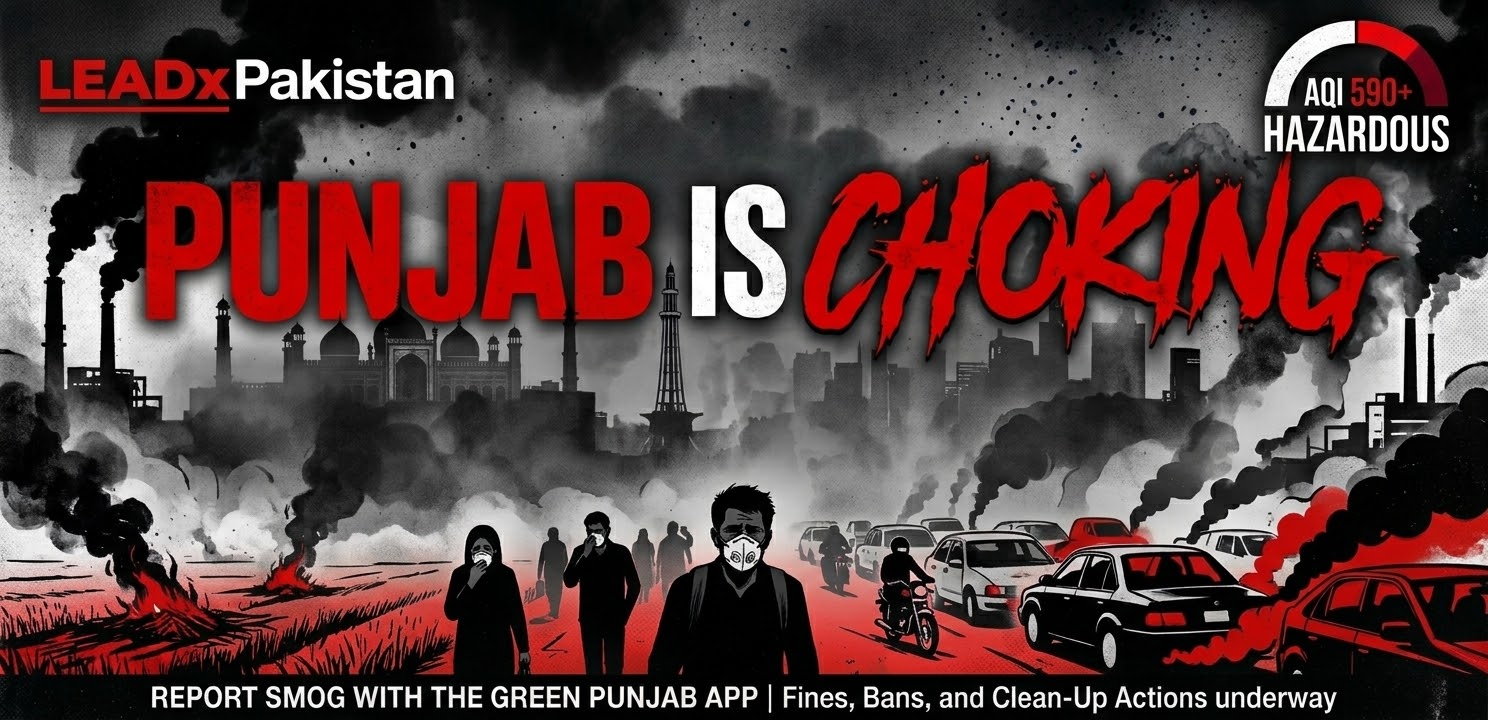
Particularly given how bad winters have grown in major cities like Lahore, Gujranwala, Multan, and Faisalabad, writing about smog and air pollution in Pakistan might strike home. These cities often have high air quality index levels (AQI), usually from October to February, sometimes as high as 500–600 AQI, which makes the area most polluted worldwide. Lahore's AQI topped 590, making it the most polluted big city worldwide, according to IQAir. We are not only considering typical fog. Right now, it is smog, a thick gray covering over the cities produced by a choking combination of smoke, dust, and industrial emissions. From a seasonal annoyance, it has changed in Pakistan to a yearly public health emergency. But who is responsible for this? We! It is a result of human activity rather than a natural occurrence.
One element alone does not cause smog; rather, several elements contribute to it. The majority comes from vehicle emissions, industrial exhaust, and the combustion of agricultural waste. In cities, factories and brick kilns directly emit toxic gases and dust into the air. Unregulated factories and mills that burn coal generate hazardous pollutants into the atmosphere. Millions of cars, motorbikes, trucks, and buses with old engines and low-quality fuel release a lot of exhaust into the air every day. Every winter, farmers in rural areas suffocate the air by burning rice crop remains to help clear fields quickly.
As a byproduct of human activities, it severely affects daily activities. Schools close, flights are delayed, and hospitals become overcrowded with people struggling to breathe. According to the WHO, from smog hanging over cities to smoke inside the home, air pollution poses a major threat to health and climate. Stepping outside causes your eyes to burn and your throat to scratch. The World Bank estimates that health complications and lost productivity due to air pollution drain roughly 5% to 9% of Pakistan's annual GDP.
The Punjab government has implemented effective measures to combat the severe air pollution. High-powered mist machines spray water high in the air, knocking heavy dust and toxic particles out of the atmosphere. Water trucks and vacuum-style sweepers are used to clean the streets instead of dry sweeping. Police and environmental teams target smoking vehicles and stop heavy trucks from entering polluted cities during peak smog hours. Farmers are being fined for burning their leftover crop stalks, and cities have banned the burning of garbage heaps. The government has launched an app, "Green Punjab". If you see a smoking factory, polluting bus, or someone burning trash, you can report it, and a team will be dispatched to stop them.
These measures are only effective if we actively support and follow them. It is our responsibility to maintain a clean environment so that we can live healthily. In addition to following these measures, we should protect ourselves. Wearing N95 masks, using air purifiers indoors when possible, and keeping an eye on live AQI before going out should be a part of our survival kit.
Cover picture
(opens the full-size picture in a new tab)
About Zainab Waqas
I’m an English literature student who has spent years studying what makes stories work and why certain characters stick with us. While I’m just starting out and building my own body of work. For me, a great story isn't just entertainment, it is something that feels genuine and leaves a lasting impact. I’m looking for a platform where I can bring my background in literary analysis, learn the ropes of the platform, and help craft and support meaningful stories.
Comments
No comments yet. Start the conversation.