
Pakistan’s 12-Province Debate: Administrative Necessity or Constitutional Deadlock?
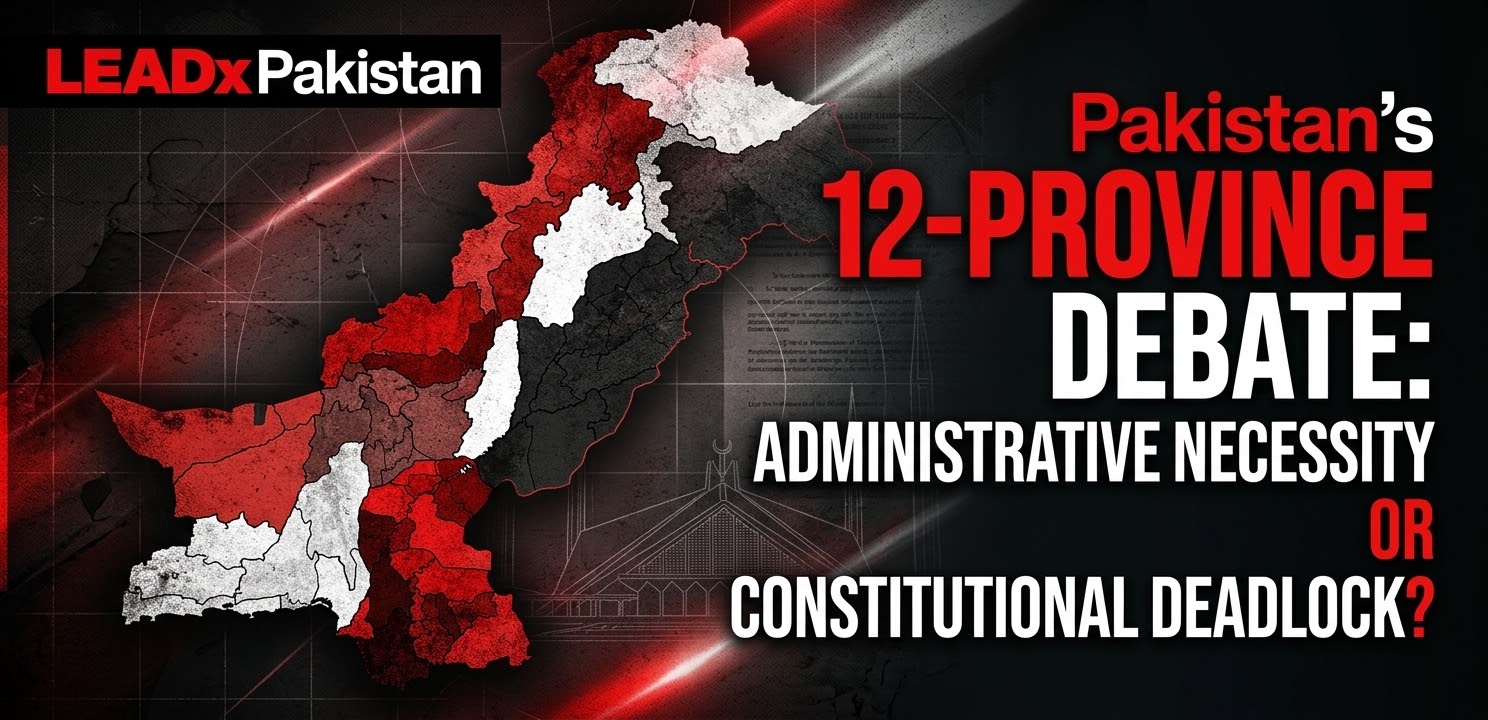
Debates over splitting Pakistan's four provinces into 12 administrative unit have reignited to better serve its 240 million residents. However, the unofficial plan faces fierce resistance from the PPP in Sindh, high economic costs, and strict constitutional hurdles requiring two-thirds majorities in both Parliament and the affected provincial assemblies.
Many years have passed over the suggestion of breaking Pakistan into more provinces to offer people faster services. Still, recent debates have helped to clarify this subject.
Pakistan currently four provinces: Punjab, Sindh, Khyber Pakhtunkhwa, and Balochistan. With the population now exceeding 240 million people, many leaders have stated that 4 provinces is simply too few. Although no official legislation has yet been provided to parliament, high ministers within government are publicly discussing the division and reports of a possible 12-province model have placed the issue firmly in the national spotlight.
Following remarks from the Interior Minister, Mohsin Naqvi, suggesting a public vote on the matter, Defence Minister Khawaja Asif has said that Pakistan could be restructured into 12 provinces (possibly by next year) provided the divisions are made for efficient administration instead of linguistic or ethnic considerations.
According to policy debates and news reports, the provinces would be divided as follows:
Punjab: 4
Khyber Pakhtunkhwa: 3
Balochistan: 3
Sindh: 2
Proponents contend that because major cities like Lahore, Karachi, Peshawar, and Quetta dominate decision making, smaller communities and distant areas are neglected. MQM-P leaders have once more underlined their demands that Karachi be split so as to enable local answers to problems experienced in the city. On the other hand, PML-N leaders have pointed out that new provinces need to be self-sufficient and shouldn't drain the federal government. Though some ministers are advocating more regions, the concept has stirred controversy among political friends. The PML-N and the PPP have been at greatest odds.
The PPP is the dominant party in Sindh. A resolution passed in September 2026 by the Sindh Assembly demands Sindh not be split. Furthermore, it is made clear by PPP leaders that any efforts to divide Karachi or change the borders of Sindh will cause major political problems. The Defence Minister, Khawaja Asif, has instructed legislators to quit "treating provinces as fiefdoms," so very tense circumstances have developed. In response, Interior Minister Mohsin Naqvi has attempted to ease tensions, stating that provincial boundaries would only be altered if all political partners agree. However, reaching a consensus appears difficult given the sharp divide in opinions.
Establishing new provinces in Pakistan is quite difficult under the present constitution. Two criteria have to be satisfied to create new regions.
Parliamentary Approval: A constitutional amendment needs a two thirds majority in the Senate and the National Assembly to pass.
Provincial Assembly Approval: Article 239(4) of the Constitution says that a province cannot be split until two thirds of its assembly vote in favour.
Experts have pointed out that the federal government still cannot alter provincial borders even if it holds a public referendum. For instance, Sindh cannot be divided without two thirds of the Sindh Assembly voting in favor.
The central question remains: Would separating contribute to help?
Many who oppose breaking Pakistan into 12 provinces say it would cost too much money. Twelve governors, chief ministers, cabinets, and many more government departments would have to be established. Many people think Pakistan just cannot afford this given its financial difficulties and mounting inflation. Many people think that local governments, including Mayors and Union Councils, should get actual money and power in order to raise standards from a more local level.
But supporters say Pakistan is just too big for only four provincial governments. To better serve people, other nations in the region have broken off into smaller states.
Though not a formal Government initiative, the concept of dividing Pakistan into twelve provinces is now much argued upon. There is no official law, no clear map, and no consensus among the main political parties. Whether or not new provinces will be formed in Pakistan in 2027, as has happened many times in the past, relies on whether leaders in Islamabad can earn trust from smaller provinces and forge an agreement across political parties.
Cover picture
(opens the full-size picture in a new tab)
About Zainab Waqas
I’m an English literature student who has spent years studying what makes stories work and why certain characters stick with us. While I’m just starting out and building my own body of work. For me, a great story isn't just entertainment, it is something that feels genuine and leaves a lasting impact. I’m looking for a platform where I can bring my background in literary analysis, learn the ropes of the platform, and help craft and support meaningful stories.
Comments
No comments yet. Start the conversation.