
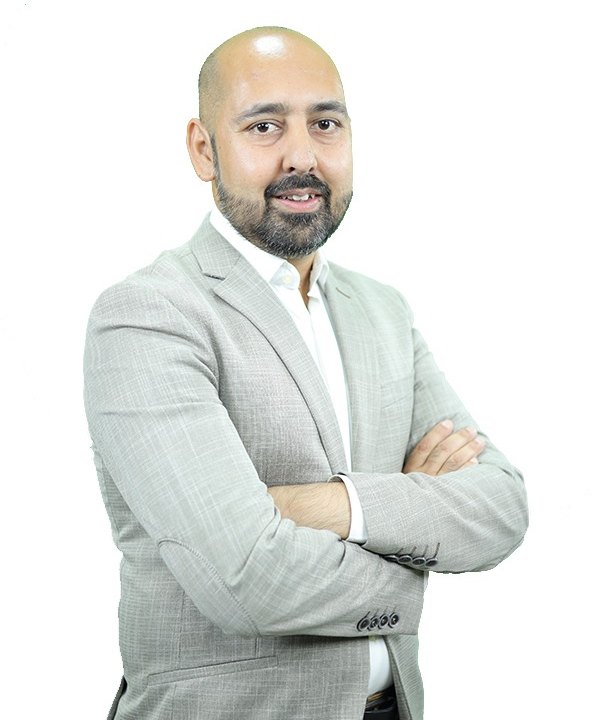
Dr. Muhammad Faisal Ali
Assistant ProfessorPakistan Institute of Development Economics
Dr. Muhammad Faisal Ali is an environmental and resource economist, researcher, and policy analyst at PIDE, specializing in climate change, climate finance, agricultural economics, and environmental governance. His work connects evidence-based research with practical solutions for Pakistan’s climate and sustainability challenges.
Biography
Dr. Muhammad Faisal Ali
Assistant Professor | Environmental & Resource Economist | Climate Change Researcher | Policy Analyst
Dr. Muhammad Faisal Ali is a distinguished researcher, environmental and resource economist, and policy analyst whose work focuses on some of Pakistan’s most pressing challenges related to climate change, environmental sustainability, agriculture, disaster resilience, and natural-resource governance.
He is currently associated with the Pakistan Institute of Development Economics (PIDE), Islamabad, where he serves as an Assistant Professor and contributes to the Center for Agriculture, Climate Change & Rural Economy (CACCRE). His research combines academic analysis with practical policy recommendations, particularly in areas where climate change, agriculture, environmental governance, and economic development intersect.
Dr. Faisal holds a PhD in Environmental and Resource Economics from the University of Agriculture, Faisalabad. His academic background has enabled him to examine environmental and climate-related challenges not only from an ecological perspective but also through the lens of economics, public policy, institutional reform, and sustainable development.
Areas of Expertise
His primary research interests include Climate Change, Agricultural Economics, and Environmental Governance, while his broader areas of expertise include:
- Climate Change Adaptation
- Climate Finance
- Carbon Markets and Carbon Credits
- Disaster Risk Management and Resilience
- Agricultural and Environmental Economics
- Agricultural Market Reforms
- Water and Groundwater Governance
- Smog and Air Pollution
- Agriculture Taxation
- Food Security
- Energy Efficiency in Agriculture
- Environmental Policy and Governance
- Sustainable Resource Management
A significant part of Dr. Faisal’s work examines how Pakistan can build greater resilience against climate-related risks while simultaneously reforming its agricultural and environmental systems. His research is particularly relevant to Pakistan because climate change increasingly affects agricultural productivity, food security, water resources, rural livelihoods, disaster vulnerability, and long-term economic development.
Climate Change & Environmental Research
Dr. Faisal has contributed extensively to research and policy discussions concerning Pakistan’s climate future. His work covers issues such as climate adaptation, climate finance, carbon markets, disaster resilience, smog, groundwater management, and sustainable agriculture.
His research contributions include work on financing Pakistan’s climate future, climate resilience in Gilgit-Baltistan, climate risk insurance, and the potential of carbon credits from renewable energy. He has also contributed to discussions concerning global mechanisms for reducing carbon emissions and Pakistan’s participation in emerging carbon markets.
Beyond climate finance, Dr. Faisal has worked on Pakistan’s environmental challenges, including smog and air pollution. His research has contributed to understanding the causes, economic consequences, and potential policy responses to Pakistan’s recurring smog crisis.
Water governance is another important dimension of his work. He has participated in policy discussions addressing Pakistan’s groundwater crisis and the need for sustainable resource-use frameworks, highlighting the connections among water scarcity, agriculture, climate change, and economic sustainability.
Agriculture, Climate & Food Security
Dr. Faisal’s research also places considerable emphasis on the relationship between climate change and Pakistan’s agricultural economy.
His work has examined agricultural market reforms, wheat-sector deregulation, food security, seed-industry reform, agricultural taxation, energy efficiency, agricultural productivity, storage infrastructure, and government intervention in agricultural markets.
Through this research, he advocates evidence-based reforms capable of improving agricultural productivity and resilience while creating more efficient markets and better outcomes for farmers and consumers.
Among his research and policy contributions are works addressing:
“Towards a Free Market: A Blueprint for Wheat Sector Deregulation”
“Unlocking Climate Finance: Potential Carbon Credits from Renewable Energy”
“Global Bargains for Reducing Carbon Emissions”
“Tackling Smog in Pakistan: Causes, Impacts, and Way Forward”
“Unveiling the Smog Crisis: Solutions Ahead”
“PIDE’s Prescription for Better Agriculture in Pakistan”
“Evaluation of Seed Industry: Way Forward”
“Climate Risk Insurance: The Missing Links”
and research and policy commentary concerning climate resilience, agricultural markets, environmental pathways, water governance, and sustainable economic development in Pakistan.
Research, Policy & Public Engagement
One of Dr. Faisal’s strengths is his ability to bridge the gap between academic research and public policy. Rather than limiting his work to academic publication, he contributes to policy reports, research briefs, public discussions, seminars, and newspaper commentary.
He has experience working as a researcher, consultant, policy analyst, reviewer, and columnist, enabling him to communicate complex economic and environmental issues to researchers, policymakers, development practitioners, students, and wider public audiences.
He has also served as a reviewer for renowned academic journals, contributing his expertise to the evaluation and advancement of research in his field.
His work has contributed to national conversations concerning climate finance, agricultural reforms, carbon markets, disaster management, environmental governance, food security, and sustainable natural-resource management.
Academic & Research Engagement
Dr. Faisal is also involved in academic mentorship and research supervision. His engagement extends to research addressing climate change and disaster-risk-management challenges in Pakistan.
His academic and professional work reflects an interdisciplinary approach that connects economics, climate science, agriculture, environmental management, disaster resilience, and public policy.
Through this approach, he seeks to identify practical and economically viable solutions to environmental challenges rather than viewing climate change solely as an environmental issue.
Regional Research Interests
His research interests extend beyond Pakistan and include international experiences and policy lessons. His identified regional interests include Vietnam, China, and Australia in relation to agriculture, as well as Germany and Brazil in relation to climate change.
This comparative perspective allows his research to examine international practices and consider how relevant lessons could contribute to Pakistan’s transition toward climate-resilient and sustainable development.
Speaker – Climate Change Session No. 2
For Climate Change Session No. 2, Dr. Muhammad Faisal Ali brings a valuable combination of academic expertise, policy research, economic analysis, and practical understanding of Pakistan’s climate vulnerabilities.
His expertise is particularly relevant to young people, researchers, policymakers, and development practitioners seeking to understand how climate change is connected with agriculture, food security, water scarcity, disaster risk, climate finance, carbon markets, environmental governance, and Pakistan’s broader economic future.
His work demonstrates that responding effectively to climate change requires more than environmental awareness—it requires evidence-based policy, innovative financing mechanisms, resilient institutions, responsible natural-resource management, agricultural transformation, and meaningful participation from government, academia, the private sector, communities, and young people.
Through his research and policy engagement, Dr. Faisal continues to contribute to the conversation on building a more resilient, environmentally sustainable, and economically secure Pakistan.
Speaker inquiry
Would you like Dr. Muhammad Faisal Ali to speak at your event, or join you for an interview? Send the LEADx Pakistan team a message.